This week, we read The Clan of the One Breasted Women, and it got me thinking about the Cold War and nuclear/atomic bomb testing in general.
There's this picture of all the scientists that worked on the Manhattan Project standing clumped together on the grayscale stairs of a random building. Situation aside, I love this picture: I once read this Op-Ed about how "the only time there has ever been more intellectual power in a single room was when Thomas Jefferson was sitting by himself writing the Declaration of Independence".*
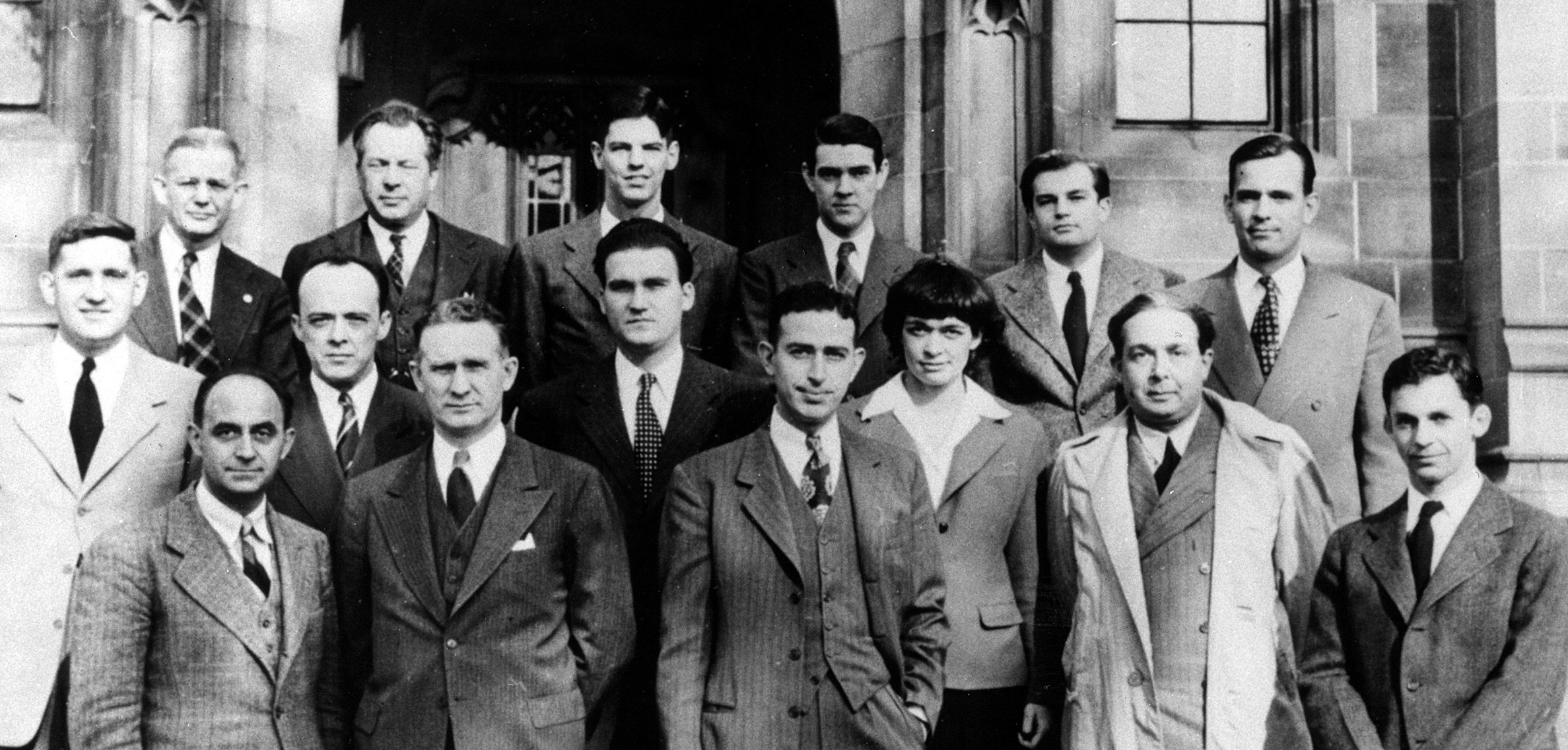

And I guess that it's because of this that our lines in the sand will always be crossed. No nuclear weapons? Fat chance. No germ-line editing? We stuck to that agreement for a grand total of six months. No cloning? Dolly was born that year. Rules are made to be broken. Not because we want to enter a nuclear war, or because we want to exploit eugenics, or because we want to clone ourselves for a human organ farm, but because we want to prove we can.
*Also, to be honest, I don't know how one can think this when *this* picture exists:

Yes Deepti! I love the APUSH and AP Econ references, it so nice to see the Nash Equilibrium outside of econ. My favorite part of the blog was the hypothetical questions you listed at the end: these questions not only provided me with a deeper connection to your message, but also provides a strong case for humans innate drive for destruction.
ReplyDeleteWow Deepti! I don’t have much knowledge in APUSH or AP Econ, but it was refreshing to be able to understand your references throughout! More than just your clear explanation, I really liked looking at the pictures you included. They provide a visual method towards understanding your blog, which is a nice touch!
ReplyDelete