I used to wish my name was Skylar.
My sister always knew this, of course, because every time we played Dress Up or School in our old babysitter's house -- before she became overwhelmed with homework and SAT scores and before I learned that talking to yourself is considered "strange" -- we would fight each other for the name. The loser got Stephanie.
Looking back, I still find this strange. My obsession with Skylar began even before I started attending American schools; the children I played Dress Up and School with were named Rohit and Anjali, our babysitter's name Kussum, and her college-aged daughter (coincidentally also) Divya. The programs I watched on television were broadcasted from Indian channels, and I listened religiously as priests in white robes taught me to sit on my heels to digest my lunch faster. When I think of my days in that house, my preschool before "real" preschool, I remember the stuffed tiger I had nightmares about, an Indian commercial advising children to leave 1/3 of their stomach empty for optimal health, listening to the train rattle by while we had collective naptime, my sister giving me her best frocks so I wouldn't cry when our mom left every morning. I remember Kussum Aunty making the best rajma I've ever had, then chastising me as I used my sleeves as napkins. I picked up stray words of Hindi from around the house, and to this day, I can't translate them back into English. And yet, even then, I wanted to be Skylar.
I outgrew this, obviously. No part of me now wants to have an Americanized name. Yet, I mentioned this off-handedly to my mother a while back, and she froze, midair, her feet making indentations in the memory foam mat next to our stove, a small ball of dough cupped in her hands. Her eyebrows creased as though I had informed her of a terminal illness diagnosis, worry creeping into every line. Maybe it's because she knows that I wasn't always so reminscent of the San Andreas Fault line; I wasn't always torn between juxtaposing ideals, told to reconcile ideas that weren't meant to coexist.
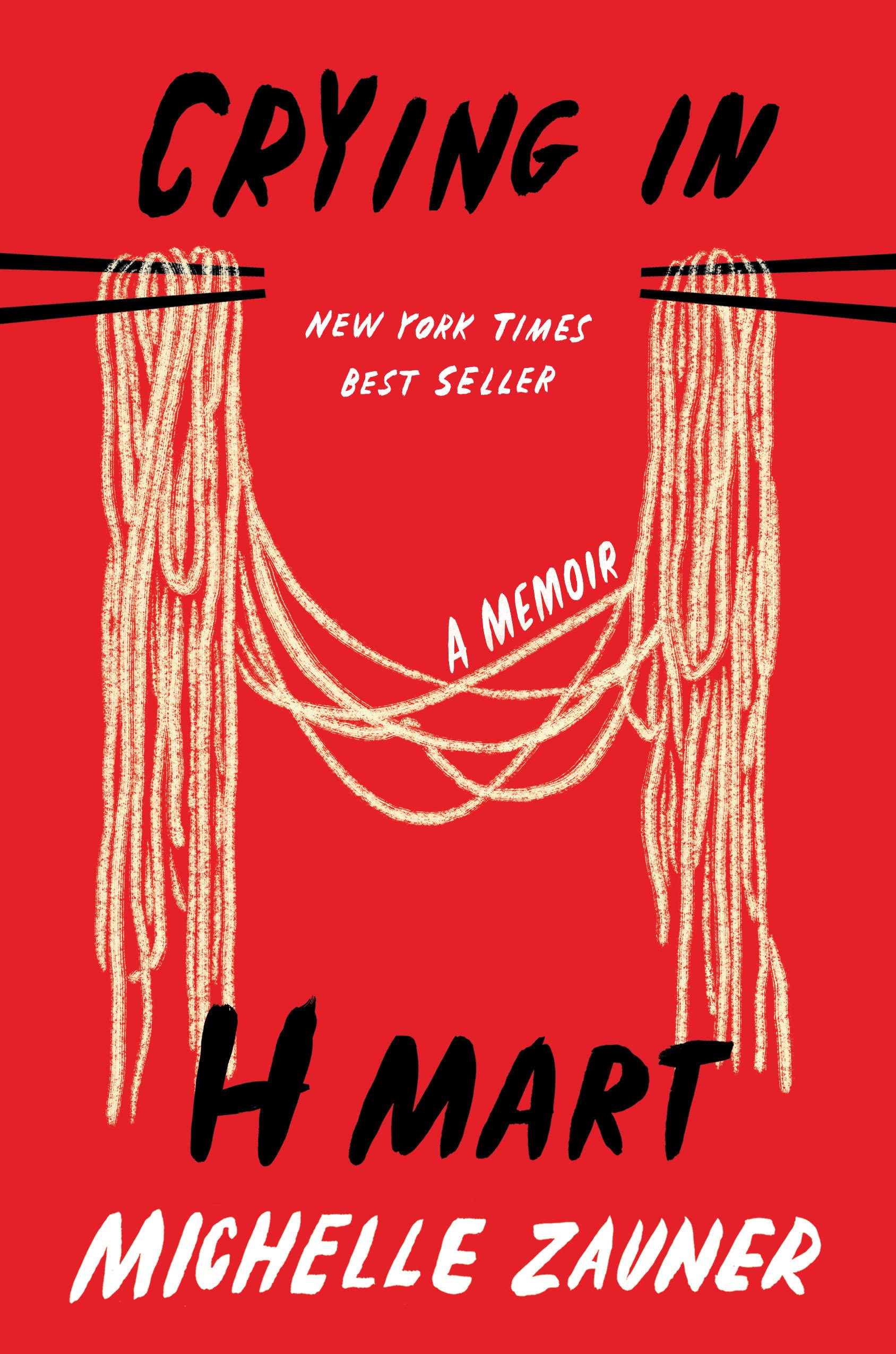
I read Crying in H Mart today, and Michelle Zauner spoke of simultaneously admiring and resenting Asian American representation in media. As an aspiring songwriter herself, she wondered if an Asian songwriter rising to fame "stole" her chance, her ideas, her novelty. I suppose in a subconscious way, I had always thought that way about my own Indian American identity. I've read the books, I've listened to the speeches, I've learned about those awkward moments when someone looks at your lunch and wonders aloud who would ever think to combine cottage cheese and cream-based sauces (answer: very, very, very smart people). I found it trite and overdone, and more importantly, I thought I had nothing to add to this conversation.
But I do. Because I was about to enter Kindergarten when my father taught me how to spell my last name: A - G - G - A - R - W - A - L. Two G's, just because. And after six years of hearing my name pronounced correctly, with the right emphasis on the D and the proper rolling of the R, it took me almost three years of American schooling to register that my teachers' botched pronunciations were directed at me. My first grade teacher once called my mother to discuss a "hearing issue", but no, my ears were fine; I was simply unused to responding to "Dip-tea" as though that was my name.
Maybe that was what my mother thought about as I told her of my old aspirations to be renamed Skylar. Or perhaps she was thinking about all the times I had walked into Starbucks and told the barista my name was "Diana", pretending to ignore the way my parents physically cringed as I discarded my birthright. Maybe she was remembering an incident I've long forgotten, one she'll tell me about when I'm older and further removed from the fresh wound. Either way, it's strikingly clear that Skylar isn't as sealed away in my past as I would like her to be.
Because even as I'm fortunate enough to go to a school with a thriving Asian American student body and a staff that is used to handling hard-to-pronounce names, even as I find a small tribes of Asian American girls wherever I go, even though it's been a long time since I've spoken about my racial and ethnic identity and have not been preaching to the choir, I feel the current flowing, tempting me to abandon the (already loose) roots and just... let it go. Let Mr. Roncone hand Dip-Tea her high school diploma, instead of me. Let my publisher convince me to take a pseudonym, becoming a ghost writer for my own memoir. Let the tombstone-engraver-people drop the second G in my last name, because I should be grateful they were at least kind of close.
But then I remember that this name, Deepti, was chosen by my grandfather on my mother's side, my thatha. I was named after the goddess of wealth and good fortune, named for the radiance emitted by my religion's sacred lamps. And my last name, Aggarwal, technically means mountains, but more practically, brands me as a baniyah, the small community in India that could "look at something and tell you how much it weighs and costs" (direct quote from my father). It's evidence of the centuries of Indian blood coursing through my veins, no matter how often I've skinned my knees in American soil. My grandmother, as she taught me how to make milk cakes and chai, would whisper furiously that you, my dear, are where dirt and fire meet the sea.
I don't often feel forgotten, or erased, or lost as an Indian American; I've come to terms with my identity as a mosaic of parts, some brown, some red-white-and-blue. It's been a decade since I've recited the Hanuman Chalisa in the cafeteria, aghast as my so-called friends covered their ears to one of the most important prayers in all of Hinduism. It's been even longer since I've regretted never learning Hindi, because I was lucky enough to be born to parents who taught me that my identity is the one thing I don't ever have to explain to anyone. But there is one thing I refuse to relent: when I'm burning at the funeral pyre, and my soul is vanishing from this body, I want the world to remember my name, exactly as it was.
Comments
Post a Comment